
What is Indian Civilization | Historical Roots and Cultural Diversity - Philosophical Contributions - Literature and Languages in Indian Civilization

What is Indian Civilization?

Indian civilization refers to the rich and diverse cultural, historical, social, and philosophical heritage of the Indian subcontinent. It is one of the world's oldest and most enduring civilizations, with a history spanning thousands of years. Indian civilization encompasses a wide array of cultures, languages, art forms, religious beliefs, and social practices. Here are key aspects of Indian civilization:

1. Historical Roots: Indian civilization has ancient roots dating back to the Indus Valley Civilization, one of the world's oldest urban cultures, which existed around 3300–1300 BCE in what is now present-day Pakistan and northwest India.
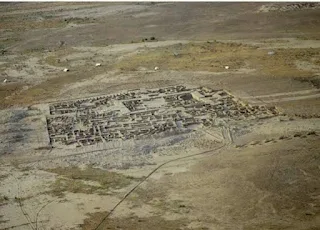
Historical Roots and Cultural Diversity - Philosophical Contributions - Literature and Languages in Indian Civilization

2. Cultural Diversity: India is known for its cultural diversity, manifested in various art forms, music, dance, languages, clothing, and cuisine. Each region of India has its own distinct cultural traditions and practices.

3. Religious Plurality: India is the birthplace of major religions, including Hinduism, Buddhism, Jainism, and Sikhism. It is also home to significant communities of Muslims, Christians, Jews, and others. Religious diversity has played a crucial role in shaping Indian society.

4. Philosophical Contributions: Indian civilization has made significant contributions to philosophy, with schools of thought such as Vedanta, Nyaya, Samkhya, and Yoga. Ancient texts like the Vedas, Upanishads, and Bhagavad Gita are foundational to Indian philosophical traditions.

5. Art and Architecture: India boasts remarkable architectural and artistic achievements, including ancient cave temples, intricate sculptures, ornate palaces, and stunning monuments like the Taj Mahal. Indian art reflects diverse regional styles and historical periods.

6. Literature and Languages: Indian literature is vast and diverse, encompassing classical works in Sanskrit, regional literature in various languages, and modern literary expressions. Sanskrit, Hindi, Bengali, Tamil, Telugu, and many other languages are spoken in different parts of the country.

7. Social Traditions: Indian society has a complex social structure with traditions such as the caste system, joint families, and arranged marriages. While modern India is undergoing social changes, traditional customs continue to influence social interactions and relationships.

8. Scientific and Mathematical Contributions: India made significant contributions to mathematics, astronomy, medicine, and other sciences. Ancient mathematicians like Aryabhata and Brahmagupta made pioneering advancements in mathematics.

Indian civilization's vastness and complexity make it a subject of continuous study and fascination for scholars and enthusiasts around the world. Its enduring influence is felt not only in South Asia but also globally, shaping art, philosophy, and culture beyond India's borders.

Comments

Popular posts from this blog

Biography of Manohar Joshi

Biography of Manohar Joshi: Manohar Gajanan Joshi is an Indian politician who has played a significant role in Maharashtra state politics. Born on December 2, 1937, in a middle-class family in a village called Ganeshpeth in Ratnagiri district, Maharashtra, Joshi's journey into politics was marked by his association with the Shiv Sena, a right-wing regional political party in India. Joshi's political career began in the late 1960s when he joined the Shiv Sena, which was then led by its founder, Bal Thackeray. He quickly rose through the ranks of the party due to his organizational skills, dedication, and ideological alignment with the party's principles, which advocated for the interests of the Marathi-speaking population of Maharashtra. In 1972, Manohar Joshi won his first election to the Brihanmumbai Municipal Corporation (BMC), marking the beginning of his electoral career. He served as a corporator in the BMC and later became the Mayor of Mumbai in 1976. Joshi's tenu...

Professor Cheiro Prophecies about India | 5 predictions Professor Kiro - Kiro made these amazing predictions for India

Professor Cheiro Prophecies:  Here is Kiro made these amazing predictions for India: Professor Kiro was born in November 1866 in England. At the age of 17, Kiro came to Mumbai and met astrologer Vednarayan Joshi. With his advice, he will reach the Himalayas, Kashmir, Ladakh and Varanasi. From here, he studied astrology extensively. Kiro made many predictions in his life, which we are giving you here. Cheiro, whose real name was William John Warner, was a prominent Irish astrologer and palmist who gained fame in the late 19th and early 20th centuries. He was known for his accurate predictions and was consulted by various prominent figures of his time, including Mark Twain, Oscar Wilde, and Thomas Edison. Cheiro also made some predictions related to India. Parada Kahanee One of his notable predictions about India was made in his book "Cheiro's World Predictions," published in 1926. In this book, he wrote about the possibility of India gaining independence from British...

Biography of Abbie Hoffman | Early Life and Political Activism - Later Years and Personal Life - Legacy of Abbie Hoffman

Biography of Abbie Hoffman: Abbie Hoffman (November 30, 1936 – April 12, 1989) was an American political and social activist known for his involvement in the counterculture and anti-war movements of the 1960s and 1970s. He was a key figure in the Youth International Party (Yippies) and was known for his theatrical and often humorous protests.  Here is a brief biography of Abbie Hoffman: Early Life of Abbie Hoffman: 1. Birth: Abbie Hoffman was born on November 30, 1936, in Worcester, Massachusetts, USA. 2. Education: He attended Brandeis University, where he earned a degree in psychology in 1959. Parada Kahanee Political Activism: 1. Civil Rights Movement: Hoffman began his activism by participating in the civil rights movement during the early 1960s. 2. Youth International Party (Yippies): In 1967, Hoffman, along with Jerry Rubin and others, co-founded the Yippies, a countercultural and anti-authoritarian political party known for its unconventional and theatrical protes...