Biography of Dietrich Bonhoeffer | Early Life and Education - International Experience - Resistance Against Nazi Regime - Legacy of Dietrich Bonhoeffer

Biography of Dietrich Bonhoeffer:
Dietrich Bonhoeffer (1906–1945) was a German theologian, pastor, and anti-Nazi dissident, known for his active resistance against Adolf Hitler's regime during World War II. His life and work have left a lasting impact on Christian theology and the broader understanding of ethics in the face of totalitarianism.
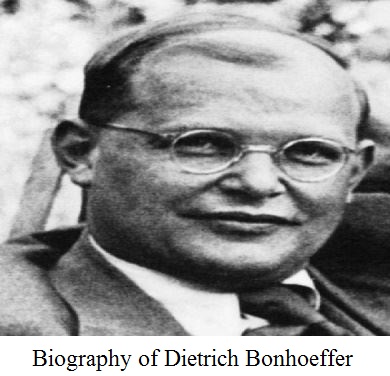 |
| Biography of Dietrich Bonhoeffer |
Key Points in Bonhoeffer's Biography:
1. Early Life and Education:
Dietrich Bonhoeffer was born on February 4, 1906, in Breslau (now Wrocław, Poland), into a prominent German family. His father, Karl Bonhoeffer, was a renowned psychiatrist, and his mother, Paula, was a teacher.
2. Theological Studies:
Bonhoeffer showed an early interest in theology. He pursued his theological studies at the University of Tübingen and later at the University of Berlin. Influenced by prominent theologians like Karl Barth, he developed a deep understanding of Christian theology.
3. International Experience of Dietrich Bonhoeffer:
Bonhoeffer spent time studying at Union Theological Seminary in New York City and became involved in the Abyssinian Baptist Church in Harlem. This experience exposed him to the realities of racial injustice, significantly shaping his theological and ethical perspectives.
4. Ordination and Pastoral Work:
After completing his studies, Bonhoeffer was ordained in the Lutheran Church in 1931. He served as a pastor in London and Barcelona, gaining valuable international experience. His theological writings during this time reflected a commitment to a socially engaged Christianity.
5. Dietrich Bonhoeffer's Resistance Against Nazi Regime:
As the Nazi regime rose to power in Germany, Bonhoeffer became increasingly alarmed by its racist and authoritarian policies. He emerged as a vocal critic of Hitler and the persecution of Jews. Bonhoeffer joined the Confessing Church, a movement that opposed the Nazification of German Protestantism.
6. Seminary and Illegal Pastoral Work:
Bonhoeffer established an underground seminary to train pastors for the Confessing Church. The seminary operated in Finkenwalde, but the Gestapo forced its closure in 1937. Bonhoeffer continued his pastoral work in secret, knowing that his activities were under constant surveillance.
7. Involvement in Anti-Hitler Plots:
Bonhoeffer's resistance against the Nazi regime escalated. He became involved in various plots to overthrow Hitler, including efforts to provide support to the German resistance. Bonhoeffer's theological convictions played a crucial role in motivating his opposition to Hitler's atrocities.
8. Imprisonment and Execution:
Bonhoeffer was arrested by the Gestapo in 1943 and was imprisoned for his involvement in anti-Hitler activities. Despite his imprisonment, he continued to write letters and reflections on faith and resistance. Tragically, on April 9, 1945, just a few days before the liberation of the concentration camp where he was held, Dietrich Bonhoeffer was executed on the direct orders of Hitler.
Legacy:
Dietrich Bonhoeffer's legacy extends far beyond his untimely death. His theological writings, including works like "The Cost of Discipleship" and "Letters and Papers from Prison," continue to influence Christian thought. Bonhoeffer's emphasis on the active role of faith in social and political issues has inspired generations of theologians and activists. His courageous stand against injustice and tyranny serves as a profound example of ethical and moral courage in the face of adversity.
Comments
Post a Comment