
Aligarh Movement | Educational Reforms - Social and Educational Upliftment - Political Awareness - Key features of the Aligarh Movement

Aligarh Movement:

The Aligarh Movement was a socio-educational reform movement in British India initiated by Sir Syed Ahmad Khan, a prominent Muslim scholar, reformer, and educationist. The movement aimed at the upliftment and socio-economic development of Muslims in India, particularly in the wake of the socio-economic and educational backwardness faced by the community during the 19th century.
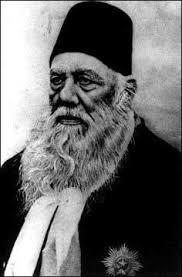
Educational Reforms - Social and Educational Upliftment - Political Awareness - Key features of the Aligarh Movement
Sir Syed Ahmad Khan

Key features of the Aligarh Movement include:

1. Educational Reforms: The primary focus of the movement was on modern education for Muslims. Sir Syed Ahmad Khan believed that Western education and scientific knowledge were essential for the progress of the community. In 1875, he founded the Muhammadan Anglo-Oriental College in Aligarh (later upgraded to Aligarh Muslim University), which became a central institution for providing modern education to Muslims.

2. Promotion of Scientific Knowledge: Sir Syed emphasized the importance of scientific education and rational thinking. He advocated for the study of scientific subjects along with traditional Islamic studies.

3. Social and Educational Upliftment: The movement aimed at improving the social and educational status of Muslims, who were lagging behind in various fields. The idea was to equip the community with the skills and knowledge needed to compete in the changing socio-economic landscape.

4. Promotion of Urdu Language: Sir Syed Ahmad Khan played a key role in the promotion and development of the Urdu language. He believed that Urdu could serve as a unifying language for Hindus and Muslims and played a crucial role in the cultural and educational advancement of Muslims.

5. Formation of Scientific Society: Sir Syed established the Scientific Society of Aligarh in 1864 to translate Western works into native languages and promote scientific knowledge among Indians.

6. Social Reforms: The Aligarh Movement also addressed social issues within the Muslim community. Sir Syed advocated for the abolition of purdah (veil) and encouraged Muslims to adopt modern ways of living without compromising their religious identity.

7. Political Awareness: While the Aligarh Movement was primarily focused on education and social reforms, it also contributed to the political awareness of the Muslim community. It laid the foundation for future political movements among Muslims in India.

The Aligarh Movement had a lasting impact on the educational and socio-economic conditions of Muslims in India. Aligarh Muslim University (AMU) continues to be a prominent educational institution that reflects the vision of Sir Syed Ahmad Khan.

Comments

Popular posts from this blog

Biography of Manohar Joshi

Biography of Manohar Joshi: Manohar Gajanan Joshi is an Indian politician who has played a significant role in Maharashtra state politics. Born on December 2, 1937, in a middle-class family in a village called Ganeshpeth in Ratnagiri district, Maharashtra, Joshi's journey into politics was marked by his association with the Shiv Sena, a right-wing regional political party in India. Joshi's political career began in the late 1960s when he joined the Shiv Sena, which was then led by its founder, Bal Thackeray. He quickly rose through the ranks of the party due to his organizational skills, dedication, and ideological alignment with the party's principles, which advocated for the interests of the Marathi-speaking population of Maharashtra. In 1972, Manohar Joshi won his first election to the Brihanmumbai Municipal Corporation (BMC), marking the beginning of his electoral career. He served as a corporator in the BMC and later became the Mayor of Mumbai in 1976. Joshi's tenu...

Professor Cheiro Prophecies about India | 5 predictions Professor Kiro - Kiro made these amazing predictions for India

Professor Cheiro Prophecies:  Here is Kiro made these amazing predictions for India: Professor Kiro was born in November 1866 in England. At the age of 17, Kiro came to Mumbai and met astrologer Vednarayan Joshi. With his advice, he will reach the Himalayas, Kashmir, Ladakh and Varanasi. From here, he studied astrology extensively. Kiro made many predictions in his life, which we are giving you here. Cheiro, whose real name was William John Warner, was a prominent Irish astrologer and palmist who gained fame in the late 19th and early 20th centuries. He was known for his accurate predictions and was consulted by various prominent figures of his time, including Mark Twain, Oscar Wilde, and Thomas Edison. Cheiro also made some predictions related to India. Parada Kahanee One of his notable predictions about India was made in his book "Cheiro's World Predictions," published in 1926. In this book, he wrote about the possibility of India gaining independence from British...

Biography of Abbie Hoffman | Early Life and Political Activism - Later Years and Personal Life - Legacy of Abbie Hoffman

Biography of Abbie Hoffman: Abbie Hoffman (November 30, 1936 – April 12, 1989) was an American political and social activist known for his involvement in the counterculture and anti-war movements of the 1960s and 1970s. He was a key figure in the Youth International Party (Yippies) and was known for his theatrical and often humorous protests.  Here is a brief biography of Abbie Hoffman: Early Life of Abbie Hoffman: 1. Birth: Abbie Hoffman was born on November 30, 1936, in Worcester, Massachusetts, USA. 2. Education: He attended Brandeis University, where he earned a degree in psychology in 1959. Parada Kahanee Political Activism: 1. Civil Rights Movement: Hoffman began his activism by participating in the civil rights movement during the early 1960s. 2. Youth International Party (Yippies): In 1967, Hoffman, along with Jerry Rubin and others, co-founded the Yippies, a countercultural and anti-authoritarian political party known for its unconventional and theatrical protes...