
Mumtaz Mahal was also the Chief Wife of Mughal Empress and Mughal ruler Shah Jahan. In the memory of Mumtaz, his husband Shah Jahan had constructed Taj Mahal in Agra.
Mumtaz Mahal was born as the daughter of Abdul Hassan Asaf Khan in a Persian family of Agra by the name of Arjumand Banu Begum. Arjumand Banu was seen on 10 May 1613 at the age of 19 by Prince Khurram, who later became famous as the Mughal ruler Shah Jahan, Shah Jahan later gave him the title of "Mumtaz Mahal". In 1607, he became a fiancé of Shah Jahan, and in 1612 he became his third wife and was called Shahjahan's most beloved wife.
Shah Jahan and Mumtaz had fourteen children, including Aurangzeb, Prince Dara Chikon, along with their fourteen children, including her daughter, Maharani Jahanara Begum.
Shah Jahan had little love over his wife Mumtaz and the other was a lesser one. Shah Jahan had lowered the second wife and gave more rights to Mumtaz. Shah Jahan, Mumtaz was engaged to befriend and he liked to see Mumtaz as his begum.
Mumtaz Mahal had taken notice of Shah Jahan due to his love. The beauty of Mumtaz is fable in many poets, writers in his poetry and articles throughout his life. Shah Jahan used to visit his entire Mughal empire only with Mumtaz. Shah Jahan had so much confidence in Mumtaz that he had also given Mumtaz the right to seal seal and Muhar Ujah.
Mumtaz later told that he had no desire for any kind of political power. But even though Mumtaz had a great influence on Maharani Noor Jahan, Mumtaz always loved battling elephants in the field.
Mumtaz liked to meet and talk with ordinary women of his empire, and so many times he used to go for a walk in Agra's garden too.
Even after being pregnant more than 10, Mumtaz used to travel with Shah Jahan. While on the journey, he preferred to visit the entire Mughal Empire, in which he liked watching Shahjahan's military power. They had a total of 14 children, out of which 7 were born prematurely or died in adolescence only.
Mumtaz Mahal was born as the daughter of Abdul Hassan Asaf Khan in a Persian family of Agra by the name of Arjumand Banu Begum. Arjumand Banu was seen on 10 May 1613 at the age of 19 by Prince Khurram, who later became famous as the Mughal ruler Shah Jahan, Shah Jahan later gave him the title of "Mumtaz Mahal". In 1607, he became a fiancé of Shah Jahan, and in 1612 he became his third wife and was called Shahjahan's most beloved wife.
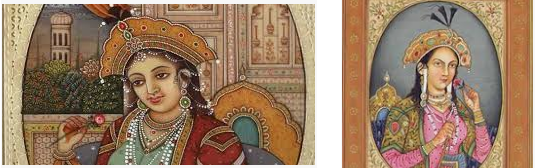 |
| Mumtaz Mahal |
Shah Jahan and Mumtaz had fourteen children, including Aurangzeb, Prince Dara Chikon, along with their fourteen children, including her daughter, Maharani Jahanara Begum.
Shah Jahan had little love over his wife Mumtaz and the other was a lesser one. Shah Jahan had lowered the second wife and gave more rights to Mumtaz. Shah Jahan, Mumtaz was engaged to befriend and he liked to see Mumtaz as his begum.
Mumtaz Mahal had taken notice of Shah Jahan due to his love. The beauty of Mumtaz is fable in many poets, writers in his poetry and articles throughout his life. Shah Jahan used to visit his entire Mughal empire only with Mumtaz. Shah Jahan had so much confidence in Mumtaz that he had also given Mumtaz the right to seal seal and Muhar Ujah.
Mumtaz later told that he had no desire for any kind of political power. But even though Mumtaz had a great influence on Maharani Noor Jahan, Mumtaz always loved battling elephants in the field.
Mumtaz liked to meet and talk with ordinary women of his empire, and so many times he used to go for a walk in Agra's garden too.
Even after being pregnant more than 10, Mumtaz used to travel with Shah Jahan. While on the journey, he preferred to visit the entire Mughal Empire, in which he liked watching Shahjahan's military power. They had a total of 14 children, out of which 7 were born prematurely or died in adolescence only.
Mumtaz Mahal death and Taj Mahal
Mumtaz Mahal deth during born in 1631 when giving birth to his fourteenth child. Mumtaz's body was buried at the Janaabad Garden on the banks of Tapi river by Shah Jahan's uncle Danial.
Shah Jahan was deeply distressed about this, it had great effect on Shah Jahan's heart. As a result, after his death Shahjahan went to live in solitude while mourning for one year.
His body was discharged in December 1631 and was buried behind Agra in a coffin made of gold. His dead body was placed in a small house on the banks of the river Yamuna, just behind Agra.
Shah Jahan started living with his army behind Burhanpur. And while living, he planned to build a huge palace in memory of Mumtaz. His dream took 22 years to come true, that palace built in memory of Mumtaz is known as "Tajmahal".
Since then, the Taj Mahal's love affair is considered to date. And people around the world come to see the Taj Mahal built by Shah Jahan in memory of Mumtaz.
I wrote a blog post on History of Mumtaz Mahal
ReplyDelete