
Agartala Tourism | Ujjayanta Palace and Neermahal - Tripura Government Museum - Jagannath Temple - Attractions and aspects of Agartala tourism

Agartala Tourism:

Agartala, the capital city of the northeastern state of Tripura in India, is a city with a rich cultural heritage, historical significance, and natural beauty. 
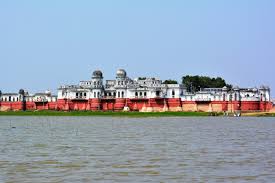
Ujjayanta Palace and Neermahal - Tripura Government Museum  - Jagannath Temple - Attractions and aspects of Agartala tourism
Agartala Tourism

Here are some key attractions and aspects of Agartala tourism:

1. Ujjayanta Palace:

Ujjayanta Palace is a beautiful palace that serves as the state legislative assembly of Tripura. The palace, surrounded by Mughal gardens, is an architectural delight.

2. Neermahal:

Neermahal, meaning "Water Palace," is a stunning palace located in the middle of the Rudrasagar Lake. It showcases a unique blend of Hindu and Islamic architectural styles.

3. Tripura Government Museum:

The museum houses a diverse collection of archaeological artifacts, sculptures, tribal art, and items depicting the cultural history of Tripura.

4. Sepahijala Wildlife Sanctuary:

Located on the outskirts of Agartala, this wildlife sanctuary is home to various species of flora and fauna, including deer, primates, and migratory birds.

5. Heritage Park:

Heritage Park is a cultural park that showcases the traditional art and lifestyle of different communities in Tripura. It's a great place to explore the local heritage.

6. Venuban Vihar Buddha Temple:

This Buddhist temple is known for its peaceful ambiance and beautiful architecture. It's a place for meditation and spiritual reflection.

7. Jagannath Temple:

The Jagannath Temple is a Hindu temple dedicated to Lord Jagannath, Balabhadra, and Subhadra. The temple architecture reflects the traditional style of Odisha temples.

8. Fourteen Goddess Temple (Chaturdash Devata Mandir):

This temple is dedicated to fourteen deities and is an important pilgrimage site in Agartala.

9. Sipahijola Wildlife Sanctuary:

Apart from the Sepahijala Wildlife Sanctuary, there's another sanctuary with the same name, known for its biodiversity and eco-friendly initiatives.

10. Buddha Temple (Budhha Mandir):

 This temple, also known as the Buddha Temple, is a peaceful place with a golden statue of Lord Buddha.

11. Malancha Niwas:

 Malancha Niwas is a guest house that offers a serene environment near the banks of the Gomati River.

12. Gedu Mia's Mosque:

 Gedu Mia's Mosque is an ancient mosque known for its historical and architectural significance.

13. Rabindra Kanan:

 Rabindra Kanan is a park dedicated to the memory of Rabindranath Tagore. It features a statue of the Nobel laureate and is a place for relaxation.

Agartala, with its palaces, temples, wildlife sanctuaries, and cultural attractions, offers a unique experience for tourists. The city provides insights into the cultural diversity and natural beauty of Tripura, making it an interesting destination for those exploring the northeastern part of India.

Comments

Popular posts from this blog

Biography of Manohar Joshi

Biography of Manohar Joshi: Manohar Gajanan Joshi is an Indian politician who has played a significant role in Maharashtra state politics. Born on December 2, 1937, in a middle-class family in a village called Ganeshpeth in Ratnagiri district, Maharashtra, Joshi's journey into politics was marked by his association with the Shiv Sena, a right-wing regional political party in India. Joshi's political career began in the late 1960s when he joined the Shiv Sena, which was then led by its founder, Bal Thackeray. He quickly rose through the ranks of the party due to his organizational skills, dedication, and ideological alignment with the party's principles, which advocated for the interests of the Marathi-speaking population of Maharashtra. In 1972, Manohar Joshi won his first election to the Brihanmumbai Municipal Corporation (BMC), marking the beginning of his electoral career. He served as a corporator in the BMC and later became the Mayor of Mumbai in 1976. Joshi's tenu...

Professor Cheiro Prophecies about India | 5 predictions Professor Kiro - Kiro made these amazing predictions for India

Professor Cheiro Prophecies:  Here is Kiro made these amazing predictions for India: Professor Kiro was born in November 1866 in England. At the age of 17, Kiro came to Mumbai and met astrologer Vednarayan Joshi. With his advice, he will reach the Himalayas, Kashmir, Ladakh and Varanasi. From here, he studied astrology extensively. Kiro made many predictions in his life, which we are giving you here. Cheiro, whose real name was William John Warner, was a prominent Irish astrologer and palmist who gained fame in the late 19th and early 20th centuries. He was known for his accurate predictions and was consulted by various prominent figures of his time, including Mark Twain, Oscar Wilde, and Thomas Edison. Cheiro also made some predictions related to India. Parada Kahanee One of his notable predictions about India was made in his book "Cheiro's World Predictions," published in 1926. In this book, he wrote about the possibility of India gaining independence from British...

Biography of Abbie Hoffman | Early Life and Political Activism - Later Years and Personal Life - Legacy of Abbie Hoffman

Biography of Abbie Hoffman: Abbie Hoffman (November 30, 1936 – April 12, 1989) was an American political and social activist known for his involvement in the counterculture and anti-war movements of the 1960s and 1970s. He was a key figure in the Youth International Party (Yippies) and was known for his theatrical and often humorous protests.  Here is a brief biography of Abbie Hoffman: Early Life of Abbie Hoffman: 1. Birth: Abbie Hoffman was born on November 30, 1936, in Worcester, Massachusetts, USA. 2. Education: He attended Brandeis University, where he earned a degree in psychology in 1959. Parada Kahanee Political Activism: 1. Civil Rights Movement: Hoffman began his activism by participating in the civil rights movement during the early 1960s. 2. Youth International Party (Yippies): In 1967, Hoffman, along with Jerry Rubin and others, co-founded the Yippies, a countercultural and anti-authoritarian political party known for its unconventional and theatrical protes...