
Biography of Bertrand Russell | Early Life and Education - Philosophical Contributions - Social and Political Activism - Later Years and Legacy of Bertrand Russell

Biography Of Bertrand Russell:

Bertrand Russell (1872-1970): Philosopher, Logician, and Social Reformer

Bertrand Arthur William Russell, born on May 18, 1872, in Trellech, Monmouthshire, Wales, was a British philosopher, logician, essayist, and social critic. He is widely regarded as one of the most influential philosophers and intellectuals of the 20th century.
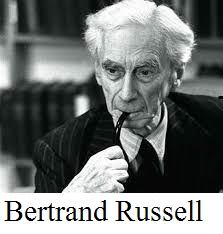
Biography Of Bertrand Russell

Early Life and Education:

Russell belonged to an aristocratic British family. He was educated at home until his teenage years when he entered Trinity College, Cambridge. At Cambridge, he studied mathematics, a field in which he made significant contributions, particularly in the foundations of mathematics.

Philosophical Contributions:

Russell's contributions to philosophy are vast and varied. He made substantial contributions to the development of modern symbolic logic, co-authoring (with Alfred North Whitehead) the monumental work "Principia Mathematica" (1910-1913), which aimed to establish the logical foundations of mathematics.

His philosophical work extended to various areas, including epistemology, ethics, metaphysics, and the philosophy of language. Russell was a leading figure in the philosophical movement of logical positivism, which emphasized the importance of empirical verification and the analysis of language in philosophical inquiry.

Social and Political Activism:

Russell was not only a philosopher but also an outspoken social and political activist. He was an advocate for peace and disarmament, and he opposed war, nuclear weapons, and colonialism. He was a prominent critic of totalitarianism, including fascism and communism. His anti-war activism led to his dismissal from a teaching position at the City College of New York in 1940.

Later Years and Legacy:

In his later years, Russell continued to write prolifically on a wide range of topics, including philosophy, politics, education, and history. He received the Nobel Prize in Literature in 1950 in recognition of his varied and significant writings.

Russell's legacy is immense. He influenced the development of modern philosophy, particularly in the analytical tradition. His writings on peace, ethics, and social justice continue to inspire activists and thinkers around the world. Bertrand Russell's commitment to reason, logic, and social progress left a lasting impact on philosophy and the broader intellectual discourse of the 20th century. He passed away on February 2, 1970, in Wales, leaving behind a wealth of philosophical works and a legacy of intellectual rigor and social activism.

Comments

Popular posts from this blog

Biography of Manohar Joshi

Biography of Manohar Joshi: Manohar Gajanan Joshi is an Indian politician who has played a significant role in Maharashtra state politics. Born on December 2, 1937, in a middle-class family in a village called Ganeshpeth in Ratnagiri district, Maharashtra, Joshi's journey into politics was marked by his association with the Shiv Sena, a right-wing regional political party in India. Joshi's political career began in the late 1960s when he joined the Shiv Sena, which was then led by its founder, Bal Thackeray. He quickly rose through the ranks of the party due to his organizational skills, dedication, and ideological alignment with the party's principles, which advocated for the interests of the Marathi-speaking population of Maharashtra. In 1972, Manohar Joshi won his first election to the Brihanmumbai Municipal Corporation (BMC), marking the beginning of his electoral career. He served as a corporator in the BMC and later became the Mayor of Mumbai in 1976. Joshi's tenu...

Professor Cheiro Prophecies about India | 5 predictions Professor Kiro - Kiro made these amazing predictions for India

Professor Cheiro Prophecies:  Here is Kiro made these amazing predictions for India: Professor Kiro was born in November 1866 in England. At the age of 17, Kiro came to Mumbai and met astrologer Vednarayan Joshi. With his advice, he will reach the Himalayas, Kashmir, Ladakh and Varanasi. From here, he studied astrology extensively. Kiro made many predictions in his life, which we are giving you here. Cheiro, whose real name was William John Warner, was a prominent Irish astrologer and palmist who gained fame in the late 19th and early 20th centuries. He was known for his accurate predictions and was consulted by various prominent figures of his time, including Mark Twain, Oscar Wilde, and Thomas Edison. Cheiro also made some predictions related to India. Parada Kahanee One of his notable predictions about India was made in his book "Cheiro's World Predictions," published in 1926. In this book, he wrote about the possibility of India gaining independence from British...

Biography of Abbie Hoffman | Early Life and Political Activism - Later Years and Personal Life - Legacy of Abbie Hoffman

Biography of Abbie Hoffman: Abbie Hoffman (November 30, 1936 – April 12, 1989) was an American political and social activist known for his involvement in the counterculture and anti-war movements of the 1960s and 1970s. He was a key figure in the Youth International Party (Yippies) and was known for his theatrical and often humorous protests.  Here is a brief biography of Abbie Hoffman: Early Life of Abbie Hoffman: 1. Birth: Abbie Hoffman was born on November 30, 1936, in Worcester, Massachusetts, USA. 2. Education: He attended Brandeis University, where he earned a degree in psychology in 1959. Parada Kahanee Political Activism: 1. Civil Rights Movement: Hoffman began his activism by participating in the civil rights movement during the early 1960s. 2. Youth International Party (Yippies): In 1967, Hoffman, along with Jerry Rubin and others, co-founded the Yippies, a countercultural and anti-authoritarian political party known for its unconventional and theatrical protes...